Choosing where to sell online can feel overwhelming. There are dozens of platforms, each promising more traffic, more sales and more growth. But not every marketplace delivers on that promise for Australian brands.
Some platforms are packed with buyers but drown small sellers in fees and competition. Others have a loyal audience but limited reach outside their niche. So which ones actually move the needle for a growing brand?
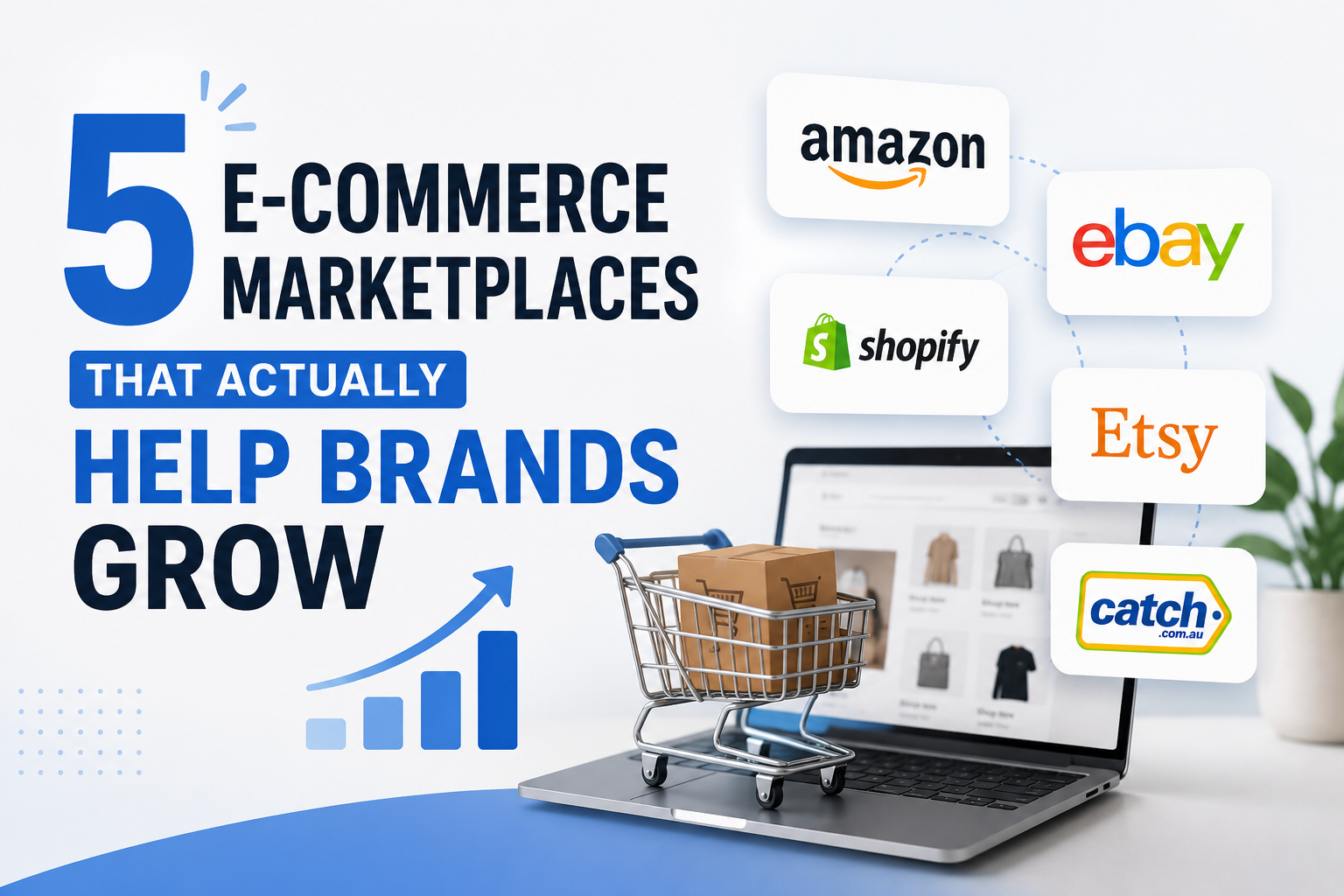
This guide breaks down five ecommerce marketplaces that genuinely help Australian businesses grow. We look at who each platform suits, what it costs, and the real pros and cons. No hype, just practical insight you can use to plan your next move.
Why Marketplaces Still Matter for Australian Brands in 2026
Australia’s online retail market keeps expanding every year. Industry estimates put the local ecommerce market on track to pass AUD 70 billion, and marketplaces now drive a large share of that growth rather than standalone stores alone.
Recent industry data suggests marketplaces account for close to 39 percent of online retail growth in Australia, and more than nine in ten Australians made at least one marketplace purchase in the past year.
That shift matters for brands. A well chosen marketplace gives instant access to buyers who are already searching and ready to purchase. You are not building traffic from zero. You are tapping into demand that already exists.
Of course, no single marketplace fits every brand. A furniture seller needs a different platform than a fashion label or an electronics retailer. That is exactly why this list covers five different platforms, each strong in its own lane.
Quick Comparison Table
| Marketplace | Best For | Audience Strength | Fee Style |
|---|---|---|---|
| Amazon Australia | Scaling brands, logistics support | Massive, mobile first buyers | Referral fee plus optional fulfilment fees |
| eBay Australia | Fast entry, auctions, used and new goods | Long established, loyal base | Listing plus final value fee |
| Kogan Marketplace | Electronics, appliances, home goods | Value focused Australian shoppers | Commission per category |
| THE ICONIC | Fashion, footwear, beauty | Fashion focused, mostly Australian traffic | Commission plus onboarding review |
| Big W Market | Home, lifestyle, family essentials | Trusted retail brand, national reach | Commission based, tiered by category |
1. Amazon Australia
Amazon Australia remains one of the biggest growth engines for local brands. It combines a familiar shopping experience with serious logistics support through Fulfilment by Amazon.
The platform covers a wide mix of categories. Electronics, home and kitchen, smart home devices, tools, toys, books, fashion and beauty all perform well here. There is also strong growth in eco friendly and smart home products, which is worth noting if your brand fits that space.
What makes it work for growth:
- Huge existing customer base searching with buying intent
- Prime branded delivery builds trust instantly
- Advanced search and personalisation puts relevant products in front of shoppers
- Fulfilment by Amazon removes the logistics headache for smaller teams
The trade off: margins tend to be tighter than other platforms, and competition for popular categories is intense. Brands that invest in strong product listings, reviews and advertising tend to do best here.
Amazon Australia suits brands ready to scale past a small, local customer base. If you already have a proven product and want national reach fast, this is usually the first marketplace worth testing.
2. eBay Australia
eBay has been part of Australian online shopping since 1999, and it still commands one of the largest audiences of any marketplace in the country, with well over 60 million monthly visits reported in past industry data.
It suits a wider range of sellers than people expect. Fashion, electronics, collectibles and home goods all do well, and eBay works for both new and used stock, which gives brands flexibility that other platforms do not offer.
Why brands still choose eBay:
- Low barrier to entry with no strict application process for most categories
- Auction and fixed price formats give sellers control over pricing strategy
- A large, established buyer base that trusts the platform
- Good option for clearing excess stock alongside core product lines
Where it gets tricky: visibility for smaller or newer sellers can be limited without paid promotion. Standing out among established listings takes some investment in optimisation and advertising.
eBay works particularly well as a second channel alongside Amazon, giving brands a place to test new products or move older stock without cannibalising their main store.
3. Kogan Marketplace
Kogan built its name on electronics and appliances, and its marketplace has grown into a genuine shopping destination covering home and garden, technology, fashion and fitness categories.
Kogan appeals to value focused Australian shoppers. People come here expecting competitive pricing, which makes it a strong fit for brands that can offer good value without compromising on quality.
Strengths for growing brands:
- Loyal, price conscious customer base with strong repeat purchase behaviour
- Broad category range beyond just electronics
- Growing market share as competitors like Catch have exited the space
- Local Australian brand recognition, which builds trust with buyers
Consider this: Kogan’s audience responds strongly to pricing and promotions, so brands relying purely on premium positioning may need to adjust their strategy here.
For brands in electronics, appliances, home goods or fitness, Kogan is worth serious consideration, especially now that it has picked up market share following Catch’s closure in 2025.
4. THE ICONIC
If your brand sits in fashion, footwear or beauty, THE ICONIC deserves a close look. It is part of the Global Fashion Group network and pulls in millions of monthly visitors, with the vast majority based in Australia.
Products from THE ICONIC and its marketplace sellers appear side by side in the same format, which keeps the shopping experience consistent for buyers. That consistency builds trust, even though it means less room for individual seller branding.
Why fashion brands grow here:
- Highly targeted audience already shopping for style, footwear and beauty
- Strong mobile experience that matches how Australians shop today
- Established credibility that smaller fashion labels can borrow from
- Access to a seller centre for support once you are onboarded
One thing to plan for: getting approved to sell on THE ICONIC involves a manual application process, and the platform is selective about which brands and products it accepts. It is not designed for testing random items. It suits brands with a clear fashion identity and consistent stock.
If your brand lives in apparel or beauty, this platform can bring serious, targeted growth once you are through the door.
5. Big W Market
Big W Market is one of the newer names on this list, but it carries serious weight. Since taking over MyDeal in 2025, it has grown into a strong local platform for home, lifestyle and family focused products.
The platform covers furniture, home décor, appliances, gardening tools and other lifestyle categories, backed by Big W’s established brand reputation and nationwide retail presence.
Why it earns a spot here:
- Trusted household name with a loyal, family oriented customer base
- Strong visibility through both online and physical retail channels
- Good fit for home, furniture and lifestyle brands specifically
- Backing from a major Australian retail group adds long term stability
Keep in mind: the platform is more focused on home and lifestyle categories, so it may not suit brands outside that space as naturally as a broader marketplace would.
For brands selling into the home, furniture or lifestyle space, Big W Market offers a level of trust and reach that is hard to match among newer platforms.
If you want a clearer picture of which marketplace fits your specific product range, it often helps to talk it through with people who work across these platforms daily. You can get in touch with our team for a quick, no pressure chat about your options.
How to Choose the Right Marketplace for Your Brand
Picking a marketplace is not about choosing the biggest name. It is about matching your product, pricing and brand story to the right audience.
Here is a simple way to think it through:
- Know your category. Fashion brands lean toward THE ICONIC. Home and lifestyle brands often do better on Big W Market. Electronics and value focused products suit Kogan.
- Check your margins. Amazon offers huge reach but takes a bigger cut through fees and fulfilment costs. Make sure your pricing still works after fees.
- Think about logistics. If you do not have your own fulfilment set up, Amazon’s fulfilment service can save serious time and stress.
- Test before you commit fully. Many successful sellers list on two or three platforms at once, then shift more attention to whichever channel earns the best margin.
- Watch the GST threshold. In Australia, GST registration applies once your turnover passes AUD 75,000. Factor this into your pricing from day one.
Tips to Grow Faster Once You Are Listed
Getting onto a marketplace is only step one. A few practical habits make a real difference to growth after that:
- Keep product titles and descriptions clear, honest and specific rather than stuffed with keywords
- Invest in decent product photography, since most Australian shoppers browse on mobile first
- Respond quickly to buyer questions and reviews to build trust signals
- Monitor your fees regularly, since marketplace commission structures do change over time
- Cross list carefully rather than copying the same listing everywhere without adjusting for each platform’s audience
Frequently Asked Questions
Which marketplace is best for a new Australian brand with a small budget? eBay is often the easiest starting point because there is no strict application process and fees are manageable for smaller sellers.
Do I need to register for GST to sell on these marketplaces? Only once your business turnover passes AUD 75,000 in a 12 month period. Below that threshold, GST registration is optional for most sellers.
Can I sell on more than one marketplace at the same time? Yes, and most established brands do exactly that. Selling across two or three platforms spreads risk and helps you find where your margins work best.
Is Amazon Australia worth it for a small brand? It can be, especially if your product suits Fulfilment by Amazon. The trade off is tighter margins and stronger competition, so strong listings and reviews matter more here than on smaller platforms.
What happened to Catch.com.au? Catch closed permanently on 30 April 2025 after ongoing financial losses and rising competition from Amazon, Kogan and international platforms. Sellers who used Catch have largely shifted to Kogan, Amazon and Big W Market.
Final Thoughts
There is no single best marketplace for every Australian brand. Amazon offers scale and logistics support. eBay gives you an easy, low risk entry point. Kogan suits value driven categories. THE ICONIC is built for fashion. Big W Market brings trust to home and lifestyle products.
The real growth comes from matching your brand to the right platform, watching your margins closely, and adjusting your approach as each marketplace evolves. Start with one or two platforms that fit your category, measure the results honestly, and expand from there.
If you would like help mapping out the right marketplace strategy for your brand, reach out to our team and we can walk through your options together.