Selling on Amazon Australia is getting more competitive every quarter. New sellers join daily. Ad costs keep climbing. And customers scroll past anything that looks generic.
If you are running Sponsored Products campaigns and not seeing the return you expected, you are not alone. Many Australian sellers waste budget on broad keywords, ignore negative targeting, or set campaigns once and forget them.
This guide breaks down ten strategies that actually work for Amazon.com.au sellers in 2026. No fluff. Just practical steps you can apply this week.
What Are Amazon Sponsored Products, Exactly
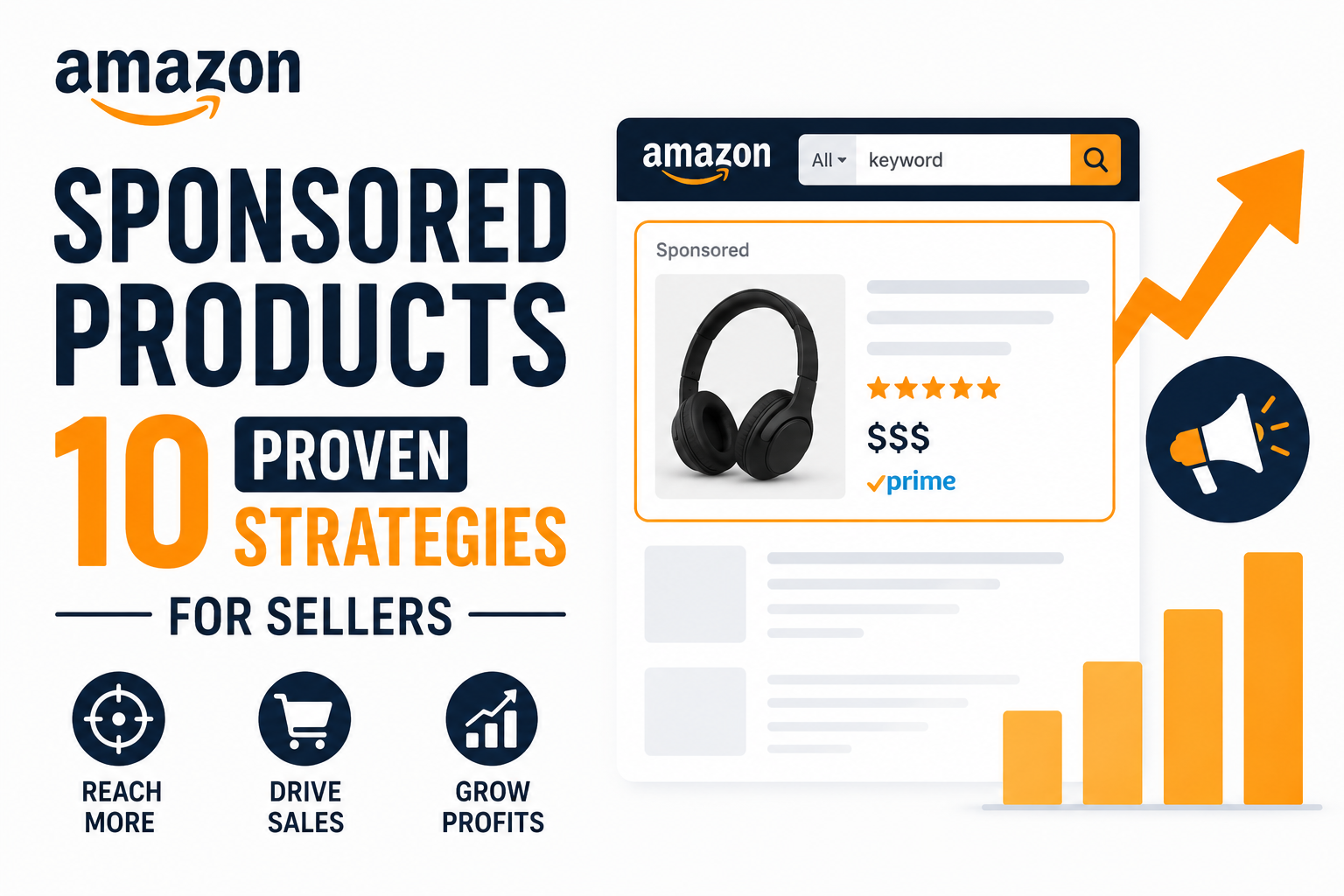
Sponsored Products are pay per click ads that appear in Amazon search results and on product pages. They look like normal listings but carry a small “Sponsored” tag.
For Australian sellers, this ad type usually delivers the fastest visibility boost. It works well for both new listings with zero reviews and established products fighting for the top spot.
The catch is simple. If your targeting is lazy, your ad spend disappears fast, especially with Australia’s smaller marketplace size compared to the US.
Why Sponsored Products Matter More in Australia
Amazon Australia has fewer sellers per category than Amazon US. That sounds like an advantage, and it often is.
But it also means search volume per keyword is lower. Every click costs more relatively, so precision matters more here than in larger markets.
According to Amazon’s own advertising resources, sellers who structure campaigns by match type and monitor search term reports weekly see noticeably better ACOS (Advertising Cost of Sale) over time. That principle applies directly to the Australian marketplace, where budgets tend to be tighter and mistakes are more costly.
1. Start With a Tight Keyword Match Strategy
This is the foundation. Get it wrong and everything after it struggles.
Most Australian sellers use one campaign with mixed match types. That is a mistake. Split your campaigns by match type instead.
- Exact match: use for your highest converting, proven keywords
- Phrase match: use for keyword variations you expect to convert
- Broad match: use only for early stage keyword discovery
Running exact match phrase match and broad match separately gives you clean data. You can see exactly which match type drives sales and which one drains budget.
Quick Tip
Start new products with broad match to discover real search terms. Move winning terms into exact match campaigns within two to three weeks.
2. Use Negative Keywords Every Single Week
Negative keywords stop your ad from showing on irrelevant searches. Skipping this step is one of the most common reasons Australian sellers overspend.
Check your search term report weekly. Look for:
- Terms with high clicks but zero sales
- Terms unrelated to your product category
- Competitor brand names, if not part of your strategy
Add these as negative exact or negative phrase keywords. This single habit often cuts wasted spend by fifteen to twenty five percent within a month.
3. Optimise Your Listing Before You Scale Ads
Ads bring traffic. Your listing converts that traffic into sales. If the listing is weak, no amount of ad spend fixes it.
Before increasing budget, check your listing has:
- A clear, benefit led title within Amazon’s character limits
- High quality images showing the product from multiple angles
- Bullet points that answer real buyer questions
- A backend search term field filled with relevant, non repeated keywords
A well optimised listing typically has a higher conversion rate. That means every dollar spent on Sponsored Products goes further.
4. Structure Campaigns Around Buyer Intent
Not every keyword means the same thing. “Wireless earbuds Australia” and “cheap wireless earbuds” attract different buyers with different intent.
Group your keywords by intent, not just by product category.
| Intent Type | Example Keyword | Campaign Goal |
|---|---|---|
| High intent | buy [product] online Australia | Drive conversions |
| Comparison intent | best [product] for [use case] | Build consideration |
| Discovery intent | [product category] Australia | Build awareness |
This structure helps you set realistic bids. High intent keywords deserve higher bids because they convert faster.
5. Set Bids Based on Data, Not Guesswork
Many sellers set a flat bid across all keywords. That ignores how differently each keyword performs.
Instead, review your bid strategy every one to two weeks using actual performance data.
Steps to follow:
- Pull your campaign report and sort by ACOS
- Increase bids slightly on keywords converting below your target ACOS
- Lower bids on keywords converting above your target ACOS
- Pause keywords with high spend and zero conversions after sufficient data
This approach keeps your ad account responsive to real market behaviour, not fixed assumptions.
6. Use Amazon’s Placement Reports to Refine Strategy
Amazon shows your ads in three placements: top of search, rest of search, and product pages. Each placement performs differently.
Check your placement report monthly. If “top of search” converts well but costs more, consider a placement bid adjustment there specifically, rather than raising bids across the board.
This targeted approach protects your budget while still capturing high value placements.
7. Test Seasonal Campaigns Around Australian Shopping Events
Australian shopping behaviour has its own calendar. Amazon’s global sale days matter, but so do local patterns.
Key periods to plan around include:
- Prime Day (July)
- Black Friday and Cyber Monday (late November)
- Boxing Day sales (December 26)
- Back to school period (late January)
Increase budgets two weeks before these dates. Build a dedicated campaign rather than adjusting your always on campaigns, so you can measure seasonal performance cleanly.
8. Combine Sponsored Products With Organic Ranking Efforts
Sponsored Products ads can influence organic ranking indirectly. More sales history often supports better organic placement over time.
This is why pairing paid ads with a strong overall Amazon store strategy matters. Sellers focused purely on ads, without attention to reviews, pricing, and fulfilment quality, tend to plateau.
If managing this alongside daily operations feels overwhelming, working with a team that handles Amazon store management end to end can free up time to focus on product and strategy decisions.
9. Monitor ACOS and TACOS, Not Just Sales Volume
Sales volume alone can be misleading. A campaign generating strong sales but poor margins is still a problem.
Track two metrics consistently:
- ACOS (Advertising Cost of Sale): ad spend divided by ad generated sales
- TACOS (Total Advertising Cost of Sale): ad spend divided by total sales, including organic
TACOS gives a clearer picture of how ads support your whole business, not just isolated campaigns. A declining TACOS over time, alongside stable or growing revenue, usually signals healthy organic growth supported by ads.
10. Review and Refresh Campaigns Every 30 Days
Campaigns are not a set and forget task. Amazon’s algorithm, competitor activity, and buyer behaviour all shift over time.
A simple monthly review should include:
- Pausing underperforming keywords
- Adding fresh negative keywords
- Testing new ad copy or product images tied to campaigns
- Reallocating budget toward top performing campaigns
Sellers who commit to this rhythm generally see steadier performance than those who launch a campaign and leave it untouched for months.
Common Mistakes Australian Sellers Should Avoid
- Running only automatic campaigns without moving to manual targeting
- Ignoring mobile shopping behaviour, which makes up a large share of Amazon Australia traffic
- Setting the same budget for every product regardless of margin
- Failing to align ad spend with actual profit margins after Amazon fees
Frequently Asked Questions
How much should I budget for Sponsored Products as a new seller in Australia?
There is no fixed number that works for everyone. A common starting point is testing with a modest daily budget per campaign for two to three weeks, then adjusting based on ACOS and conversion data specific to your category.
How long does it take to see results from Sponsored Products?
Most sellers need at least two to four weeks of consistent data before making major decisions. Early results can be misleading due to low sample size.
Is automatic targeting or manual targeting better?
Both have a role. Automatic targeting helps discover new keywords. Manual targeting gives control once you know which keywords convert. Many successful campaigns use both in combination.
Does Sponsored Products help organic ranking directly?
Not directly, but increased sales from ads can contribute to better organic visibility over time, since Amazon’s ranking factors consider sales history and conversion rate.
Should I run Sponsored Products if my listing has few reviews?
Yes, but expect a lower conversion rate initially. Focus ad spend on driving early sales and reviews, then scale once social proof builds.
Final Thoughts
Sponsored Products can genuinely grow an Amazon business in Australia, but only with consistent attention. Random bidding and ignored search term reports waste money fast.
Start with tight match types. Clean your negative keywords weekly. Watch ACOS and TACOS, not just sales numbers. Review everything monthly.
These habits, applied consistently, tend to matter more than any single trick or tool.
If you would rather have a dedicated team manage campaigns, listings, and ongoing optimisation for you, feel free to get in touch to discuss your Amazon store’s current setup.